
Formula 1 Comes to Circuit of the Americas – Simulation Plays a Big Role
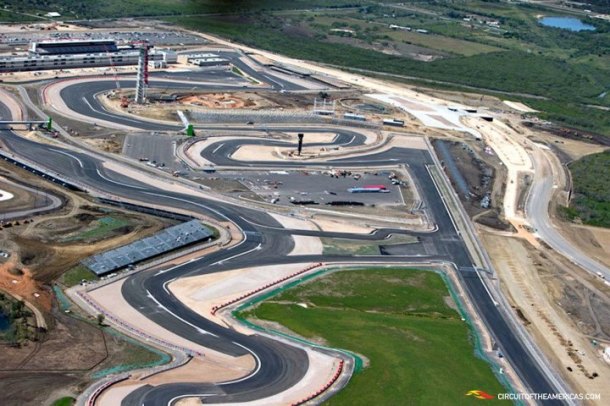 Formula 1. You know, that sport where some of the most talented drivers in the world basically drive fighter jets glued to the pavement with the help of sticky tires and massive down force?
Well, it’s back to the US for the first time since British driver Lewis Hamilton won the 2007 Grand Prix at Indy.
Sure it brings all the politics, money, and buzz that follow the sport on its multi-continent global tour. Some might not be aware it’s also bringing F1 drivers and teams that have already driven the recently completed track countless times all ready, on computers. Simulation has been adopted more and more in F1 over the last several years and teams are starting to rely more on digital testing to provide valuable data and help decide strategy.
For years, F1 teams have invested heavily in custom simulators that allow them to experience the track with their own highly accurate model of their car using real team data. Some custome F1 sims are rumored to cost in the 10’s of millions of dollars range. For some perspective, most consumer simulators costs about the same as a well equipped sedan on the dealership showroom. Circuit of the Americas, the first FIA sanctioned Grand Prix circuit built in the United States, a Hermann Tilke track, has a little bit of everything. The mixed bag could prove a challenge for drivers and the engineering crew with the very tight hairpins at the end of fast sections and prime passing zones where DRS could play a big role. It’s not surprising teams take their simulator sessions so seriously.
With their team of engineers and coaches and specialized simulator operators, F1 drivers are able to learn the track ahead of time and clock days of virtual testing prior to ever arriving at the real track. This pays huge dividends when trying to maximize ever second on the track to find the perfect setup. Teams have arrived with theoretical setups which work as a baseline. Having already seen each of the corners countless times before, drivers are more comfortable with the track and can spend more energy working with their engineers instead of starting from scratch having to learn the course.
While only a few handful of real life human beings (if F1 drivers are in fact human) will be driving for a professional team competing at the United States Grand Prix this weekend, the rest of us are able to connect to the sport in a way not possible until relatively recently. PC-based simulation software like Codemaster’s F1 2012, Simraceway and rFactor all have version’s of the elaborate 20 turn 3.427 mile track. Here’s a side-by-side look at F1 2012 and Simraceway’s versions of the course.
We’ve come a long way from just watching races on TV. Fans have live timing and scoring on our phones, streaming video over tablets but you know we’re spoiled when we can drive the brand new race track in rich detail long before the track opens for the pros in real life.

No comments